


Quality of cleaning services more important than the lowest price: experts on changes in public procurement
In the healthcare sector, maintaining cleanliness is not just a matter of aesthetics, but above all, the safety of patients and staff. That is why it is increasingly emphasized that in public procurement for cleaning services, quality – not just the lowest price – should be the key criterion.
This topic was one of the main themes of the “Public Procurement Academy” workshops held in Warsaw. The event, organized by the Federation of Polish Entrepreneurs and the newspaper Rzeczpospolita, was attended by representatives of public institutions as well as experts from the professional cleaning services market.
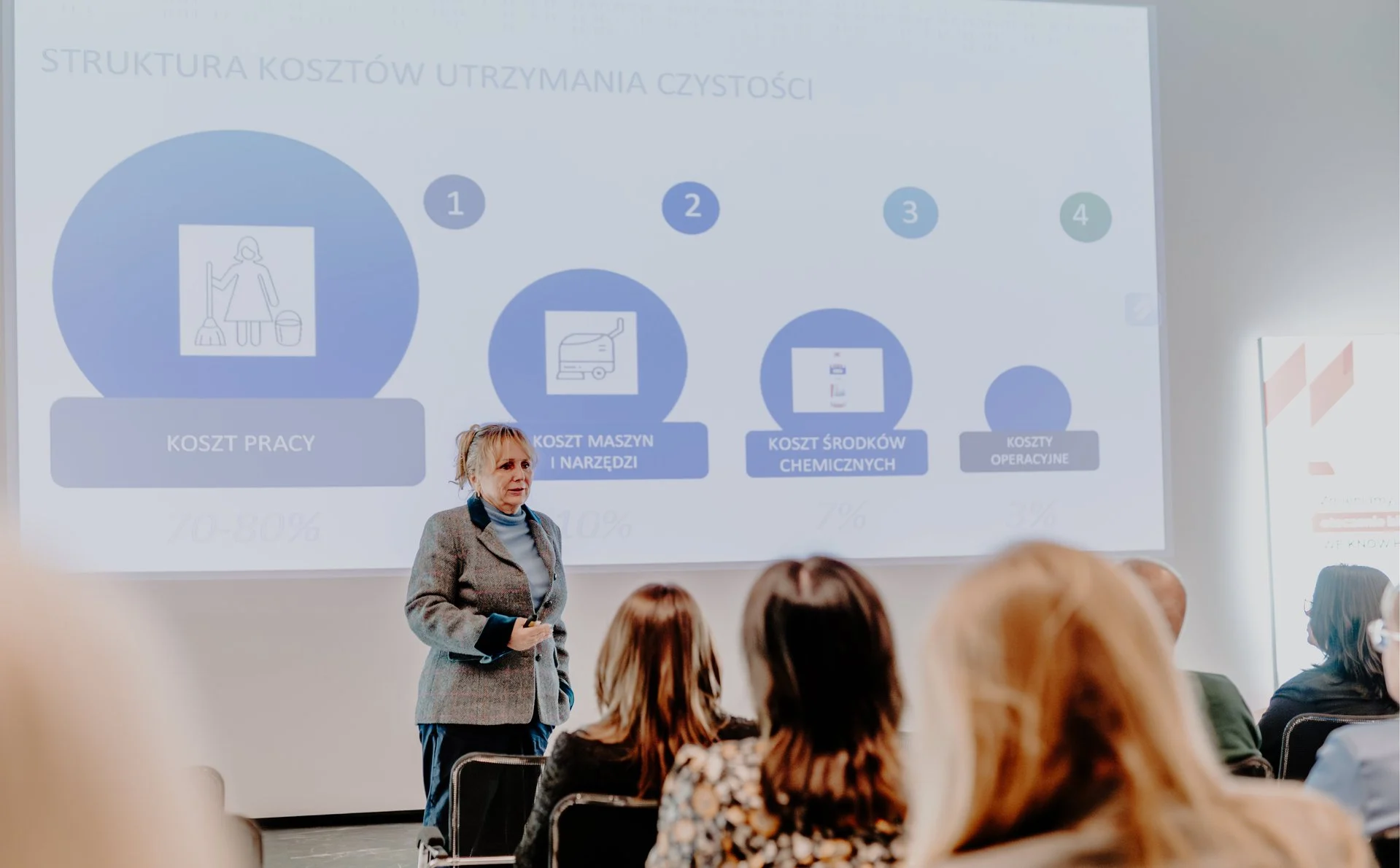
Foto: Kamila Bujakowska
From lowest price to best quality
As emphasized by Agnieszka Olszewska, President of the Public Procurement Office (UZP), the public procurement market is moving away from a model where the sole deciding criterion was price.
“Now, the focus is on ensuring that a company undertaking a task funded with public money performs it well and meets the expectations of the contracting authority. It does not necessarily have to be the cheapest offer – the law has finally recognized that quality comes at a price.”
In practice, this means placing greater emphasis on analyzing the contracting authority’s needs, properly planning procurement procedures, and evaluating offers based on the real value and quality of the service.
The biggest cost? People
The perspective of the cleaning services industry was presented by Jolanta Sergot-Kowalska, Director of Cleaning Consulting, who highlighted the actual cost structure in the sector.
“The largest component is labor costs, which account for 70–80% of the total. The rest are machinery and tools – around 10%, cleaning chemicals – around 7%, and operational costs – around 3%,” explained the expert.
Therefore, as she emphasized, properly preparing a procurement should take into account multiple factors that affect both cost and service quality: facility traffic, required hygiene standards, finishing materials, and service hours.
Results matter, not the number of people with mops
One of the most common mistakes in public procurement is focusing on the number of employees rather than the final result.
“When negotiating a cleaning contract, the client shouldn’t discuss how many people will come or at what hours. We agree that it should be clean, and that’s what we pay for,” stressed Jolanta Sergot-Kowalska.
In practice, this means defining cleanliness standards for different zones of a facility – from basic hygiene in general areas to the highest sterility standards required in medical areas. The expert also pointed out an often underestimated aspect – the legal responsibility associated with providing cleaning services.
“Cleaning is a legally relevant activity – using the wrong chemicals or methods can be evidence of liability in court,” warned Sergot-Kowalska. A cleaning company is responsible not only for the visual cleanliness, but also for the safety of building users, protection of finishing materials, and compliance with technical standards and occupational health and safety regulations.
SLA – a way to measurable service quality
Service Level Agreements (SLAs), which define guaranteed service levels, are playing an increasingly important role in cleaning services management.
“SLA is simply an agreement in which we clearly define the level of service to be provided and how it will be measured,” explained Sergot-Kowalska. This model relies on quality indicators (KPIs), regular service monitoring, and reporting, allowing for an objective evaluation of contract performance.
Experts believe that the future of the professional cleaning services market will be based on greater professionalization, data-driven management, and clearly defined quality standards.
These changes also include incorporating elements related to environmental protection, social responsibility, and modern service management technologies into public procurement.
Source:
Jeremi Jędrzejkowski, “Optimization of Cleaning Services Procurement,” Rzeczpospolita, 21.12.2025.
Material prepared in cooperation with Federacja Przedsiębiorców Polskich.
Topics related to service quality in professional cleaning, process professionalization, and modern approaches to procurement will be discussed during the Cleaning Forum. This is an excellent opportunity to meet industry experts, share experiences, and get inspired by practical solutions for professional cleaning services.